
The meltdown is over. The tears might have stopped, the shouting has ended and everything around you might seem calm again.
But what happens when the meltdown is over and you still don't feel okay?
For many autistic people, the aftermath of a meltdown can be just as difficult as the experience itself. You might feel completely exhausted, emotionally drained, embarrassed, tearful or unable to think clearly. Even simple everyday tasks can suddenly feel like too much.
This is something that isn't always understood by the people around us.
An autistic meltdown isn't simply a moment of frustration that disappears once the immediate situation has passed. It's an involuntary response to overwhelming experiences, and the recovery afterwards can take time.
Whether you're autistic yourself, recently diagnosed, supporting an autistic partner, or trying to understand someone you care about, let's look at what happens after an autistic meltdown and how to make recovery a little easier.
Why do you feel so exhausted after an autistic meltdown?
An autistic meltdown can happen when the demands placed on someone become too much for them to process or manage.
This might involve sensory overload, emotional stress, unexpected changes, social demands, communication difficulties or a combination of several things building up over time.
Sometimes there is an obvious trigger. Other times, it's the final small thing that pushes an already overwhelmed person beyond what they can manage.
Afterwards, you might experience:
Extreme physical or mental exhaustion.
Feeling emotionally drained or tearful.
Difficulty concentrating or making decisions.
Increased sensitivity to noise, light, touch or other sensory input.
Wanting to withdraw from people and social situations.
Feeling embarrassed, guilty or ashamed about what happened.
Needing quiet time and space without demands.
Everyone experiences autistic meltdowns differently. You might recognise some of these feelings, all of them or something completely different.
The important thing to understand is that just because the outward signs of a meltdown have stopped doesn't mean the person has immediately recovered.
How long does it take to recover from an autistic meltdown?
There isn't a set recovery time after an autistic meltdown.
Some people might begin feeling more settled after a relatively short period, while others may need several hours, the rest of the day or longer before they feel more like themselves again.
Recovery can depend on lots of things, including:
How overwhelming the experience was.
How much sensory input the person was dealing with.
Whether they were already tired, stressed or struggling.
How much additional pressure they experience afterwards.
Whether they have somewhere safe and comfortable to recover.
One of the most helpful things we can do is stop expecting recovery to happen on somebody else's timetable.
Being able to stop crying, start talking or return to an activity doesn't necessarily mean someone is ready to carry on as normal.
Sometimes the kindest thing you can offer is time.

7 gentle ways to support autistic meltdown recovery
There isn't one perfect recovery routine that works for every autistic person. What feels comforting to one person might feel overwhelming to another.
However, there are some gentle things that may help after an autistic meltdown.
1. Find somewhere quiet and comfortable
After experiencing sensory overload, additional noise, bright lighting, busy surroundings and conversations can feel incredibly difficult.
If possible, find somewhere that feels safe and comfortable.
This might be a quiet bedroom, a favourite chair, a familiar space at home or simply somewhere away from other people.
Reducing unnecessary sensory input can give someone the opportunity to rest without having to process even more information.
2. Give yourself permission to rest
You don't have to immediately get back to normal.
You don't have to finish everything on your to-do list, answer messages, tidy the house or explain what happened.
If your body and mind are telling you they need a break, try to listen.
Rest isn't laziness, and needing more recovery time doesn't mean you've failed at anything.
3. Reduce expectations and everyday demands
Even small decisions can feel surprisingly difficult after a meltdown.
Choosing what to eat, deciding what to wear or answering a simple question might feel like another demand you simply don't have the energy for.
Where possible, make things easier.
Keep routines simple, postpone non-essential tasks and avoid putting unnecessary pressure on yourself.
4. Find comforting sensory experiences
Different sensory experiences can help different people feel more comfortable.
You might find comfort in:
A favourite soft blanket or comfortable clothing.
A familiar film, programme or piece of music.
A favourite fidget or stim toy.
Gentle movement or repetitive activities.
A familiar food or drink.
Spending time with a special interest.
There is no need to force yourself to do anything that doesn't feel right.
The aim is to find what feels comforting to you, rather than following a prescribed set of activities.
5. Don't rush yourself into talking about what happened
After an autistic meltdown, you might feel upset, confused or embarrassed about what happened.
You might want to talk about it straight away, or you might not want to discuss it at all.
Both are okay.
If you're supporting someone else, try not to immediately ask lots of questions or expect them to explain their behaviour.
Wait until they're ready.
Sometimes knowing that someone isn't judging you or demanding an explanation is more helpful than finding the perfect words.
6. Be gentle with yourself
This is perhaps one of the hardest parts of autistic meltdown recovery.
You might replay everything that happened in your head.
You might worry about what other people thought, feel guilty about something you said or did, or wish you had been able to respond differently.
Try to remember that an autistic meltdown is not a character flaw.
You aren't a bad person because you became overwhelmed.
You don't need to punish yourself, apologise for existing or feel that you have to make up for needing support.
You deserve the same kindness and understanding that you would offer someone else.
7. Give yourself time before reflecting on what happened
When you're feeling more settled, you might find it helpful to think about what contributed to the meltdown.
Were there particular sensory triggers? Had you been pushing yourself too hard? Were there unexpected changes, difficult conversations or too many demands?
Sometimes looking back can help you recognise patterns and understand what support might be useful in the future.
But this doesn't need to happen immediately.
Recovery comes first. Reflection can wait.
How to support someone after an autistic meltdown
Watching someone you care about experience an autistic meltdown can be difficult, especially if you don't know what to say or do.
You might desperately want to help, but worry about making things worse.
One of the most important things to remember is that the person doesn't need to be told off, questioned or made to feel guilty about what has happened.
Instead, try to offer:
Patience: Don't expect them to recover immediately or return to their usual routine.
Understanding: Recognise that they may still be experiencing sensory and emotional overwhelm.
Space: Allow them to decide whether they want company, physical comfort or time alone.
Reassurance: Simple, gentle words can help. Something like "You're safe. There's no rush. Take the time you need" may be enough.
Practical support: Offer water, reduce noise, dim the lights or help remove unnecessary demands.
It's also important to remember that touch isn't always comforting. Ask or follow the person's previously communicated preferences rather than assuming a hug will help.
If you want to support someone well, one of the best things you can do is talk to them about their needs when they're feeling settled. That way, you can understand what helps before another difficult moment happens.
What is the difference between an autistic meltdown and an autistic shutdown?
Although they are both associated with overwhelming experiences, autistic meltdowns and shutdowns aren't quite the same.
An autistic meltdown is often more outwardly visible. It might involve crying, shouting, distressed movements or difficulty regulating emotions.
An autistic shutdown is generally more inward. Someone might become very quiet, withdraw, struggle to communicate or feel unable to respond to what's happening around them.
Both can be responses to extreme overwhelm, and both can leave someone needing time and space to recover.
It's important not to assume that someone is okay simply because they're quiet.
You can read more about recognising and supporting both experiences through the National Autistic Society's guidance on meltdowns.
Why practical reminders can help after an autistic meltdown
Something I've personally found difficult is remembering helpful strategies when I'm already overwhelmed.
You can spend time researching what might help, learn about sensory regulation and discover different recovery techniques.
But when your brain feels completely overloaded, remembering all that information isn't necessarily easy.
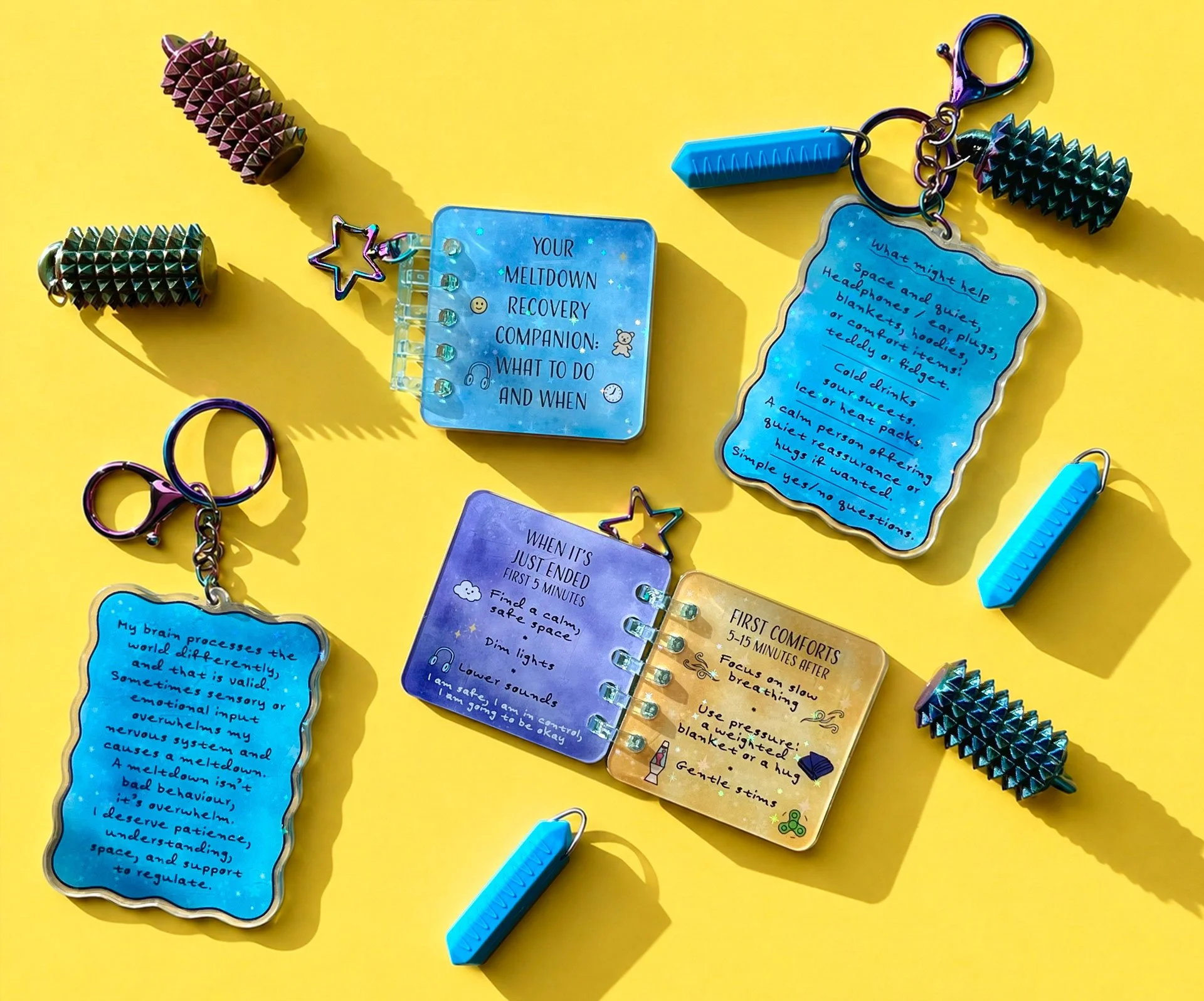
This was one of the reasons I created my Autistic Meltdown Recovery Keyring Booklet.
I wanted something small and practical that could be kept close by, with gentle reminders of things to try during different stages of recovery.
It brings together seven supportive recovery stages, offering ideas to help make those difficult moments feel a little more manageable.
It's not a set of rules, and it won't magically stop a meltdown or work in exactly the same way for everyone.
It's simply a little reminder that you don't have to remember everything when you're already struggling.
You can discover the Autistic Meltdown Recovery Keyring Booklet here.
I also created a Meltdown Support Keyring for Autism, ADHD and AuDHD, designed to help communicate support needs when speaking or explaining what's happening feels difficult.
Both were created with the intention of making everyday neurodivergent life a little easier, one small thing at a time.
You don't have to feel better straight away
Perhaps the biggest thing I'd like people to take away from this is that recovery doesn't have to look a particular way.
You might need an afternoon on the sofa. You might need to cancel plans, spend time alone or do something familiar that brings you comfort.
You might need longer than you expected.
That's okay.
An autistic meltdown doesn't define you, and the time you need afterwards doesn't make you any less capable, independent or deserving of understanding.
If you're supporting an autistic person, remember that patience and acceptance can make a huge difference.
And if you're the person recovering, please try to give yourself the kindness you deserve.
You don't have to earn rest.
You don't have to justify your needs.
And you certainly don't have to rush your recovery.
At All That Glimmers, I believe that small things can make a difference. Sometimes it's a comforting sensory object, sometimes it's a practical reminder, and sometimes it's simply having someone who understands.
More glimmers. Less overwhelm. ✨
Find out why I started All That Glimmers →
This article shares general information and lived-experience perspectives, not individual medical advice. Every autistic person is different, and support needs will vary.